
Break the Cycle of Hardware Redesign:
Future-Proof Your Systems with IOHA:B Software-Defined Serial Transceivers
The 3 Critical Bottlenecks
in Modern Industrial Design-

Physical Constraints: Mechanical Rigidity and the Reliability Nightmare
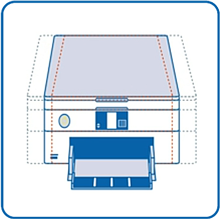
Whether it’s the narrow hinges of an MFP scanner or the multi-axis joints of a robotic arm, the sheer volume of wiring required for modern sensors has become a primary point of failure. Bulky cable harnesses not only restrict mechanical range of motion but also increase the risk of fatigue-induced breakage over time. As systems integrate more intelligence, the physical space required for traditional wiring has become the ultimate bottleneck, stifling innovation in industrial design and reliability.
-

Connectivity Constraints: The Barrier to Environmental Adaptation
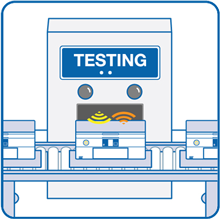
High-speed data demands and harsh environments—marked by electrical noise, high voltage, or physical isolation—push traditional copper cabling to its limit. While transitioning to wireless links or optical fiber is essential for superior isolation and reach, the specialized logic and complex circuitry required for these interfaces often derail development schedules and inflate BOM costs.
-

R&D Drainage: The Strategic Liability of Constant Hardware Re-spins

Standardizing a product line from entry-level to high-end often results in an endless cycle of PCB redesigns to accommodate varying I/O requirements. In a market where Time-to-Market is the ultimate competitive advantage, wasting elite R&D resources on tweaking hardware interfaces—rather than focusing on core application features—is a massive strategic drain.
Implementing advanced serialization with FPGAs requires scarce HDL expertise and months of grueling debugging. In an era of global talent shortages, relying on complex programmable logic for basic interface tasks is an inefficient use of engineering brainpower.
Engineering Simplicity
-

-
 Universal Media Compatibility: Full-Duplex Wireless & Optical Links
Built for simultaneous bi-directional data flow, IOHA:B acts as a seamless bridge for short-range wireless or long-haul optical fiber. Upgrade to noise-immune optical links or modular "contactless" docking systems without reworking your core signal chain, enabling robust operation in the most demanding environments.
-
 Software-Defined Agility: Standardize Your BOM, Customize via I2C
Stop redesigning boards. IOHA:B allows you to reconfigure GPIOs and functionalities on-the-fly simply by updating internal registers via a standard I2C interface. Maintain one hardware design across your entire product line and respond to new specification requirements with a single line of software code.
Related Information
Related Products
Ready to simplify your next mission-critical design?
Contact us
Leveraging THine’s proprietary SerDes technology, IOHA:B consolidates complex signal paths into a single differential pair. Reduce your cable count by up to 88%, instantly slimming down MFP hinges and optimizing robotic payloads. With reliable transmission over 15 meters, you can maintain perfect signal integrity across even the largest industrial platforms.